Home > How to tell if a Gibson is fake
How to tell if a Gibson is fake
A serial number is the first check, not the last. Date-consistency tests, seven physical checks with named sources, and what to do when you need a second opinion.
A matching serial number does not make a Gibson real. It only shows that the number follows a pattern. Check serial consistency first, then the physical details counterfeiters tend to get wrong, then get a second opinion from Gibson or a technician if a wrong call would cost you a lot or the seller cannot send photos of the back of the headstock. No single tell settles the question. The physical checks come from three named guides and are written for Les Paul-style guitars.
Step 1: Check that the serial is internally consistent
A serial check can only catch careless fakes, because real-looking numbers can be stamped on fakes. Treat a pass as an absence of red flags so far, not as clearance.
Count the digits first.
- Eight digits: the format used from 1977 ("For 1977 and newer models, check the eight-digit format") until Gibson USA moved to nine digits in July 2005. The eight-digit tests below are for these.
- Nine digits: "Beginning in July 2005, Gibson USA moved to a 9-digit number". Mahar's lists two layouts. YDDDYBRRR (from July 2005, and again from 2019): the first and fifth digits are the year, the next three are the day of the year, the sixth is a batch number and the last three are the rank within the day. YYRRRRRRR (the layout between those two periods): two year digits and a seven-digit production number, and "These serial numbers do not indicate a specific day of production." Check the year digits against the date range, and apply the day test below only to YDDDYBRRR. Compare the stamp with Gibson's serial page. Photograph the stamp.
Custom Shop, acoustic and pre-1977 guitars follow other schemes, so these tests do not apply to them. A vintage guitar needs Gibson's table or an expert. For basics on any brand, see the guide to reading a guitar serial number.
For an eight-digit serial, start with the number stamped on the back of the headstock. Guitar Center describes the format as "First and fifth digits indicate year; second thru fourth digits indicate day of year". Digits 1 and 5 together give the last two digits of the year, digits 2 to 4 are the day of the year, and digits 6 to 8 are the rank within that day. The tests:
- The year must fit the guitar. The format starts in 1977, so the decoded date must not be earlier than the model, or in the future. Gibson USA moved to nine digits in July 2005, so a later eight-digit serial on a Gibson USA electric deserves a question. Gibson's own serial page still lists the eight-digit format as "1977-Present" for Gibson USA, Gibson Acoustic and Gibson Memphis, so on an acoustic or a Memphis guitar a later year is not a red flag by itself.
- The day must exist. The middle three digits are a day of the year, so a day number that does not exist in that year (a day past the end of the year in a non-leap year, for instance) cannot be real.
- The model must exist in that year. If the guitar's model or finish did not exist in the year the serial decodes to, ask the seller and Gibson. Reissues and reused model names can explain a mismatch, so it is a question, not proof.
Worked example (made-up serials for illustration, not real guitars). Take 81237567. Digits one and five are 8 and 7, so the year reads as 1987. Digits two to four are 123. January to April 1987 add up to 120 days, so day 123 is May 3. The last three digits, 567, are the rank. Now try 83667567: same year, but day 366 does not exist in 1987, which is not a leap year, so this number fails. Passing this test proves little, since a faker can pick a valid day.
If you cannot find the number, see where the serial number is on a guitar.
Guitar.com says a genuine serial "should be somewhat hard to read" because "they stamp it into the wood before they finish it", so lacquer can soften it. Killer Guitar Rigs says "Genuine guitars have well defined, yet shallow numbering and lettering." Compare the stamp with photos of a genuine guitar of the same year rather than judging it alone.
Step 2: Check the physical details
These checks come from three published guides and we have not tested them on guitars. Fakes vary, and a good one may pass several rows. The table is for Les Paul-style guitars; SG, ES, Flying V and acoustic models differ, so do not condemn one on a single row, and compare against Gibson's own product photos for the exact model and year. The truss rod cover, stopbar and logo checks are the easiest to see in photos; the rest need the guitar in hand.
| Check | What the source says (Les Paul-style guitars) | Source |
|---|---|---|
| Truss rod cover screws | Guitar.com says a Gibson cover has "two screws, while forgeries often have three"; Killer Guitar Rigs treats three as a strong warning. | Guitar.com; Killer Guitar Rigs |
| Truss rod adjustment | Guitar.com says genuine Gibsons use an acorn-shaped adjustment nut, usually brass, and treats a hex key as a red flag. Confirm against a genuine example of the same model and year. | Guitar.com |
| Fret ends on bound necks | Guitar.com says missing fret nibs on a bound neck suggest something is wrong, and Killer Guitar Rigs says "Counterfeit models often miss out fret nibs." | Guitar.com; Killer Guitar Rigs |
| Stopbar | Guitar.com says a genuine stopbar is countersunk on both sides where the string goes in, and that most fakes miss this. | Guitar.com |
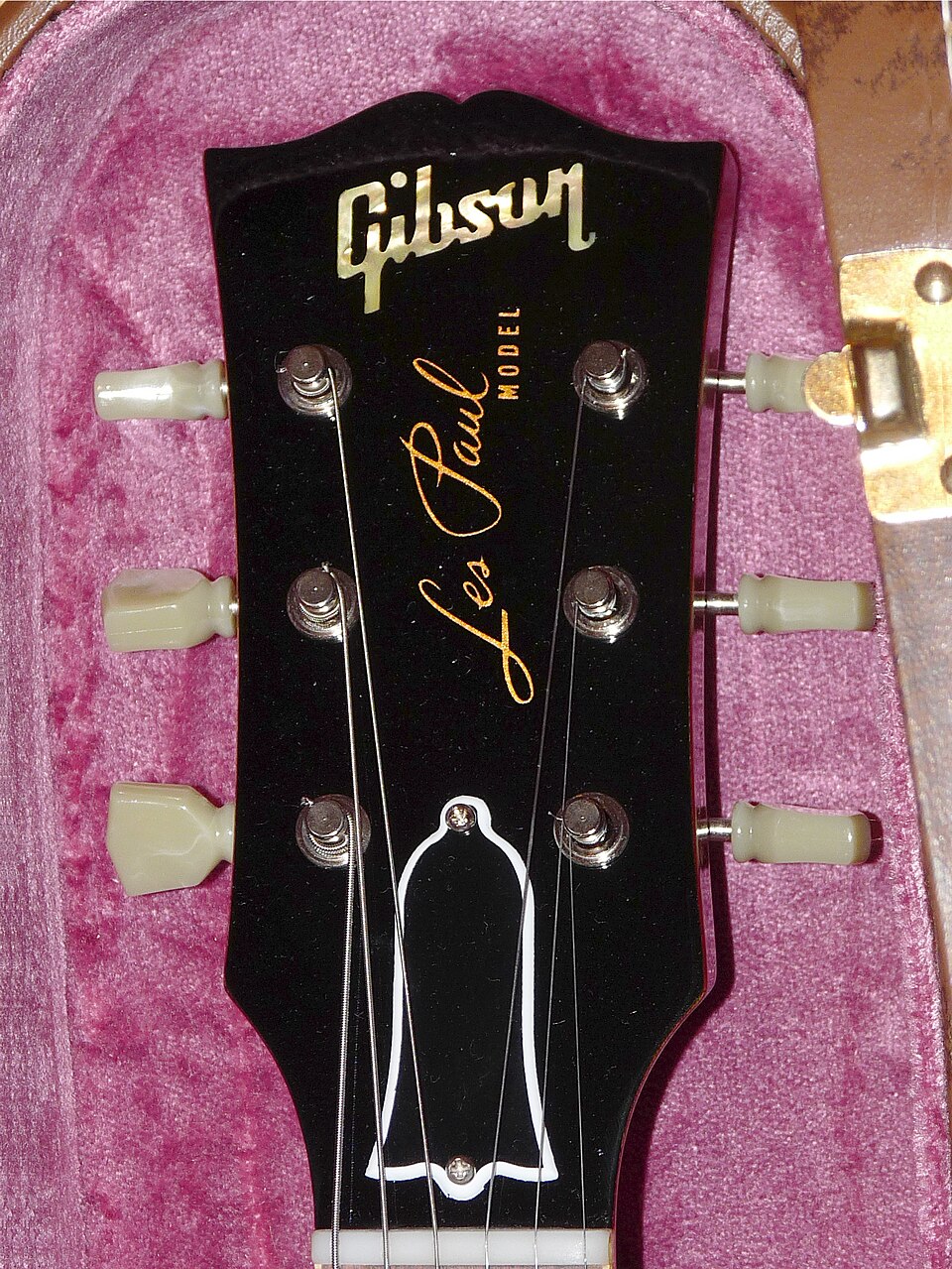
| Headstock logo | Fakes use "a cheap decal instead of a silkscreened Les Paul logo." The source names the Les Paul model logo, not the Gibson logo. | GearNews |
| Trapezoid fret markers | Killer Guitar Rigs says to check that the horizontal lines on the markers are straight. | Killer Guitar Rigs |
| Pickup selector switch | Killer Guitar Rigs says a hex nut on the selector switch is a warning sign. | Killer Guitar Rigs |
A single mismatch may be a repair or replaced part, so ask the seller. Two or more mismatches, or one mismatch plus a failed serial test, is the point to get Gibson's or a technician's opinion before paying. This is our rule of thumb, not a published standard. A guitar that passes every row is still not proven genuine, and a good counterfeit can pass several. Guitar.com also says "a quality US-made guitar should be neat, tidy and clean inside the cavity", so photograph the wiring cavity and compare it with a genuine example.
The headstock photo at the top of this page shows two of these details on one Les Paul headstock: the logo and a truss rod cover with a screw at each end. A single photo proves nothing about any other guitar, but it shows what to look at when you compare listings.
Getting a second opinion
When the guitar is expensive or the seller will not answer questions, contact Gibson Customer Service through its contact-support page with the serial number and a few photos. Gibson can tell you whether a serial is valid and what it dates to. A valid serial does not prove the guitar is real, because a real number can be copied onto a fake, so treat a reply about the serial as one input. Replies can take time, so do not let a seller's deadline rush you. Send photos as well as the number: the full front, the full back, the back of the headstock showing the stamp and the wiring cavity. Otherwise, have a technician who knows Gibsons look at it in person.
If a check fails, ask the seller for specific photos, ask Gibson, and do not pay until it is resolved.
A safe-buying checklist (generic advice)
This part is general good practice, not a Gibson-specific rule, and it applies to any used guitar.
- Prefer a seller with a written return policy, and read it before you pay. A seller who refuses returns on an expensive guitar is asking you to take the whole risk.
- Pay with a method that has buyer protection, and keep the whole conversation inside the platform. Avoid bank transfers and gift-style payments to people you cannot trace.
- Ask for photos of the specific guitar, including the back of the headstock and the cavity, not stock images. Be wary if the seller cannot provide them.
- Compare the price with sold listings for the same model and year. A big gap in your favour needs an explanation.
- If you can, have someone you trust handle the guitar in person or have a technician look at it before you commit.
- Keep every message, receipt and the listing text, in case you need to dispute the sale.
This guide is not affiliated with Gibson. Brand names are used only to say which guitars the checks apply to.