Home > Guitar serial number checker: a buyer's checklist
Guitar serial number checker: a buyer's checklist
Six checks to run on a used guitar's serial before you pay: decode it, compare the date, check where it is stamped, get photos, know what a lookup proves, protect the payment.
To check a guitar serial number before buying, decode it with the right brand's method, then see whether the date it implies fits the year in the listing and the model. After that, look at where and how the number is stamped, and ask the seller for clear photos of that spot. A serial that decodes cleanly is a good sign. It is not proof that the guitar is genuine or original, so finish with a payment method that lets you recover your money.
Nothing here needs a calculator. The decoding itself is done by the lookup for your brand: the general serial number lookup, or the Gibson, Martin, Fender and Epiphone pages. This page is the workflow around that step: what to compare, what to ask for, and where the check stops being useful.
The checklist
- Decode the serial with the right tool. Pick the lookup that matches the headstock logo, not the seller's description. If the listing names a Gibson and the number only makes sense in another brand's format, that mismatch is your first finding. If you are unsure how formats work, how to read a guitar serial number covers the common patterns.
- Compare the implied date with the listing. Write down the year the serial points to, the year the seller claims, and the year the model was introduced. All three should agree. See the next section.
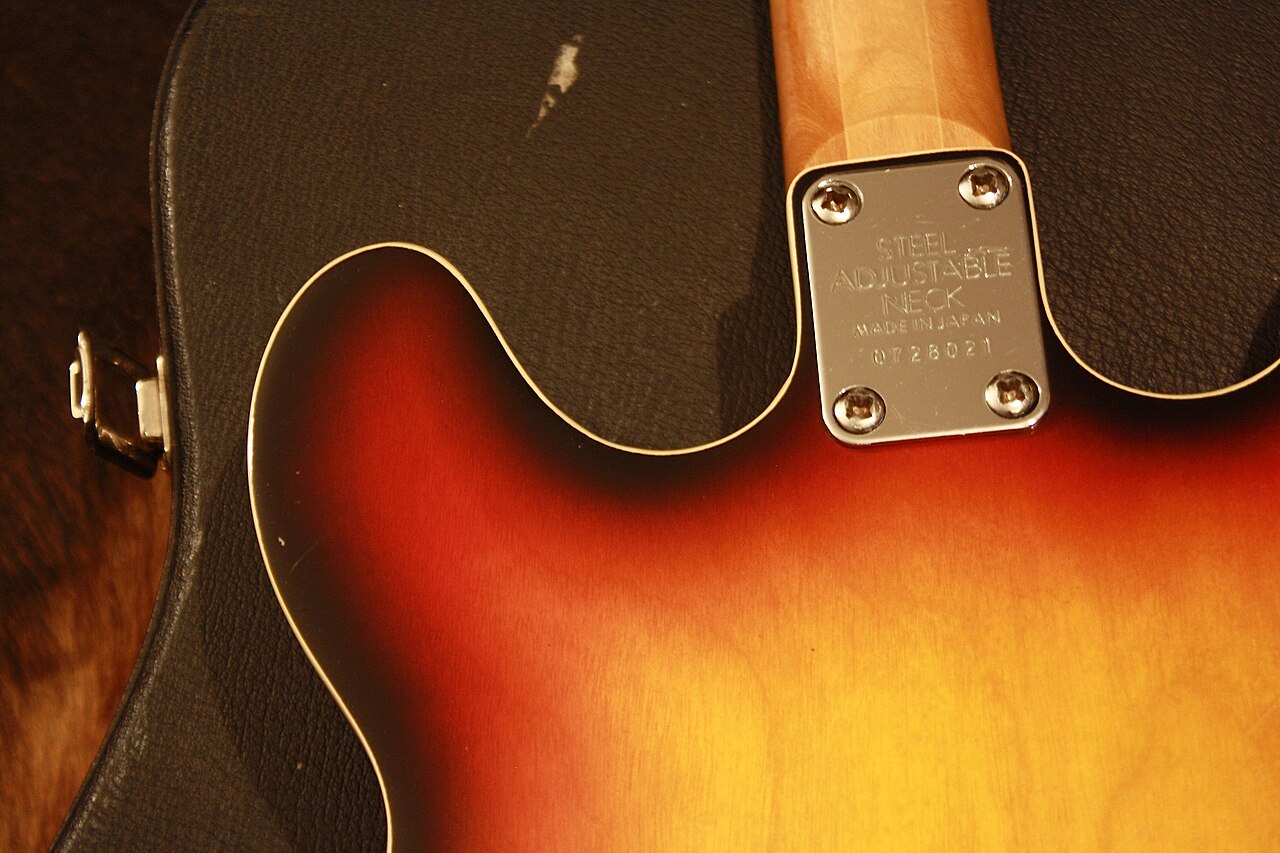
- Check where the number is stamped. Brands moved the serial around over the decades, so the location itself should fit the era.
- Ask for photos of the serial area. Back of the headstock, neck plate, neck heel or soundhole, in daylight, close enough to read every character.
- Know what a lookup can and cannot confirm. It tells you what a number should mean. It does not tell you this guitar is the one that was stamped.
- Protect the payment. Use a method and a return policy that still work if the guitar turns out to be wrong.
Compare the date with the listing and the model
A decoded date is useful only next to two other dates. The first is the year in the listing. The second is the model's introduction year, which you can find on the maker's own site or in a model history. A guitar cannot be older than the model it claims to be, so a serial that decodes to an earlier year than the model's launch deserves a direct question to the seller.
Some formats make this easy because the year is written into the number. Gibson changed its format several times, so check which period the claimed year falls in:
- 1977 to mid-2005: eight digits, used for 1977 and newer models according to Guitar Center. The year is split across the first and fifth digits (so 8 and 5 give 1985) and the day of the year is in digits two to four.
- Mid-2005 until 2014: nine digits. Gibson USA moved to a nine-digit number in July 2005, according to Mahar's Vintage Guitars.
- 2014 to mid-2019: eight digits again, where "the first two digits are the model year (14 through 19)".
- Mid-2019 on: nine digits again: "From mid 2019 Gibson returned to the 9-digit date-encoded format."
These dates come from third-party sources, so confirm the format with the Gibson lookup before calling a mismatch.
Other formats are looser. Fender serials on older guitars are ranges rather than dates, and Mahar's warns that "Neck plates were stored in bins and were definitely NOT doled out in sequential order!" Treat a Fender serial as pointing to a window of years, and expect some give either way.
Worked example (hypothetical listing). A listing says "1968 Stratocaster". The photo shows the serial on the headstock. Fender used a neck plate for serials until 1976, so a 1968 Strat should show the number on the plate. A headstock serial points to a later neck or a misdescribed guitar. Ask the seller before going further, and treat 1976 itself as a gray zone, since sources give it as both the last neck-plate year and the first headstock year.
Check where the number is stamped
The location carries information too. Where a source gives a location for an era, compare it with the guitar in the photos:
- Fender: True Vintage Guitar says Fender placed the serial number on the neck plate from 1955 until 1976 and that guitars made between 1976 and 1995 have serial numbers on the front of the headstock. Mahar's lists the back of the headstock for US and Mexican instruments from the 1990s to the present.
- Gibson: Guitar.com says Gibsons "have the serial numbers stamped on the back of the headstocks". That describes modern guitars; older and archtop models can differ, so check where to find the serial number on a guitar for the model in question. The same article notes that "they stamp it into the wood before they finish it", and says the serial number on a genuine Gibson should be somewhat hard to read. That is one repair writer's advice about modern guitars, so it is not a rule for every era. Treat a very crisp number as a reason to look harder, not as proof either way. The wider checks are in how to tell if a Gibson is fake.
- Martin: Martin's FAQ says the guitar will have the model designation and the serial number etched on the neck block, and to look in the soundhole toward the neck to see it. Martin also says a guitar made very early, with no serial, "may only be identifiable by measurements, appointments and stampings", and that "Sigma guitars and mandolins cannot be accurately dated using serial numbers." The details are on the Martin lookup page.
For other brands, see where to find the serial number on a guitar.
Matching numbers, where a brand gives you two to compare
"Matching numbers" is a car-world idea that only partly carries over to guitars. On Fender, the useful second number is a neck date or component code, and Mahar's says neck dates and component codes are often more accurate than the serial number itself. The same source adds that necks and bodies were frequently made and assembled at different times, so a small gap between the two is not by itself a red flag. A gap of years between neck and body dates, though, is worth asking about. The Fender lookup explains how to read neck dates.
Ask the seller for photos of the serial area
This is the cheapest check and the one honest sellers rarely mind. Ask for:
- The whole serial, in daylight, with no glare, sharp enough to read every character.
- A wider shot of the same area, so you can see the surrounding wood or plate and judge whether the number sits under the finish.
- The back of the headstock and the neck joint, even if the number is elsewhere.
- For an acoustic, a photo through the soundhole toward the neck block.
If the seller will not send these, or sends only cropped or edited images, treat that as information about the sale. A seller who cannot show the number is asking you to rely on the description alone. Compare the photographed characters with what you decoded, since a misread digit is a common reason a number "fails" the lookup.
What a maker's lookup can and cannot confirm
Honest limits. A serial that decodes cleanly shows that the number fits a known pattern. It does not show that the guitar is genuine, unmodified or the same instrument the number was stamped on. A number is only a mark on the guitar, and a neck can end up on a different body. A lookup also gives a year, or a window of years, not a build date, and some brands' own tables are incomplete. If the stakes are high, ask the maker or an experienced technician to look at the guitar, and see how to tell if a Gibson is fake for physical checks that go beyond the serial.
A lookup is best used to catch what does not fit, such as a wrong year, a wrong format or a wrong location. It cannot clear a guitar. A serial lookup cannot tell you whether a guitar was stolen. Search the number online for matching listings or stolen-gear reports, and if anything looks wrong, contact the police before paying.
Payment protection and return policy
The serial check lowers risk but does not remove it, so decide what happens if you are wrong before you hand over money. These points are general, not specific to any marketplace or country:
- Read the platform's buyer-protection and return terms yourself before you pay, and keep the listing, messages and photos.
- Pay through the goods-and-services or buyer-protection option, never the friends-and-family or gift option, which can void protection.
- Keep the conversation and the payment on the platform, even if the seller offers a better deal off it.
- Agree a short written inspection or return window before paying.
- If the serial, location or photos do not fit the claimed year or model and the seller cannot explain it, do not pay.
- Get the serial, the model and the stated year written into the receipt or the message thread.
- For a local sale, meet somewhere public, play the guitar, and photograph the serial yourself before paying.
Dispute rules differ by platform, payment provider and country, so check the current terms for yours.
If you are the seller
Everything above works in reverse. Put clear photos of the serial area in the listing, state the year only if you can support it, and say what you know about modifications. Buyers who can verify the guitar themselves pay with less hesitation. If you are unsure of the format, the serial number lookup is the place to start. Questions about this site can go through the contact page, and the about page explains how the decoders choose their rules.